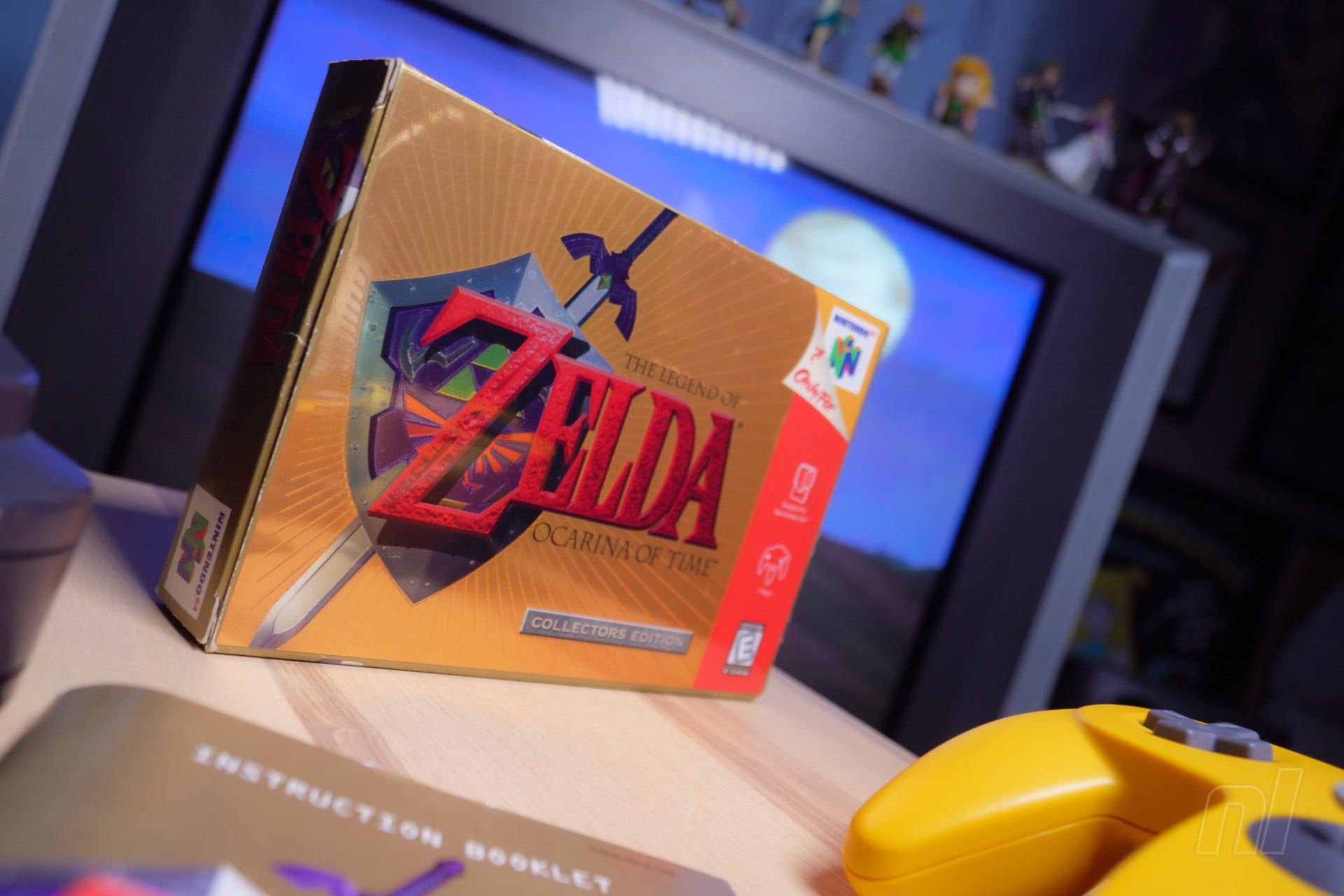
Feature: The Seven-Year Silence: How Ocarina Of Time Held My Grief At Seven Years Old
 By
Image: Gavin Lane / Nintendo Life
The Legend of Zelda: Ocarina of Time is often hailed as the best game ever created, praised for its dungeons, its soundtrack, and a critical heritage that remains the most acclaimed title in gaming history. For those of us who experienced it at that moment, it was to gaming what the transformation scene in The Wizard of Oz is when Dorothy’s world shifts to color: sheer enchantment and awe.
However, for those who seek art to navigate the unfathomable, it represented something much more delicate and essential. In the summer of my seventh year, my universe crumbled, and that same winter, a Nintendo 64 cartridge became the only refuge I had left to come to terms with the loss of my father.
In the summer preceding the European launch of Ocarina of Time on the N64, my father took his own life. My paternal figure, along with my comprehension of the transition from boyhood to manhood, vanished. While at seven you certainly sense the absence, and undoubtedly feel sorrow, something of that scale is difficult to fully grasp and articulate. Instantly, without my mother deliberately deciding it, I became the man of the household. I absorbed grief, loss, and anguish in ways that a seven-year-old mind isn’t equipped for. Part of me remained convinced he was about to enter through the door after work, while the other part was trying to fathom the reality of never seeing him again.
It’s understandable that I needed a place to retreat, somewhere to process what had transpired in a manner my youthful mind could handle. It is here that Ocarina of Time became my sanctuary.
Image: Zion Grassl / Nintendo Life
(While most readers might have played this game, please be advised that my forthcoming experiences do contain spoilers regarding the storyline. If you prefer to play it first and then return to engage with my personal journey,